Getting a Dental Quote Before Traveling to Thailand: What to Send
Sources checked 2026-11-20
Request a dental estimate before traveling to Thailand: what to put in your first message, how to share existing records, and what needs an examination.
 © ThaiCheckup
Start with a clear question and the records you already have
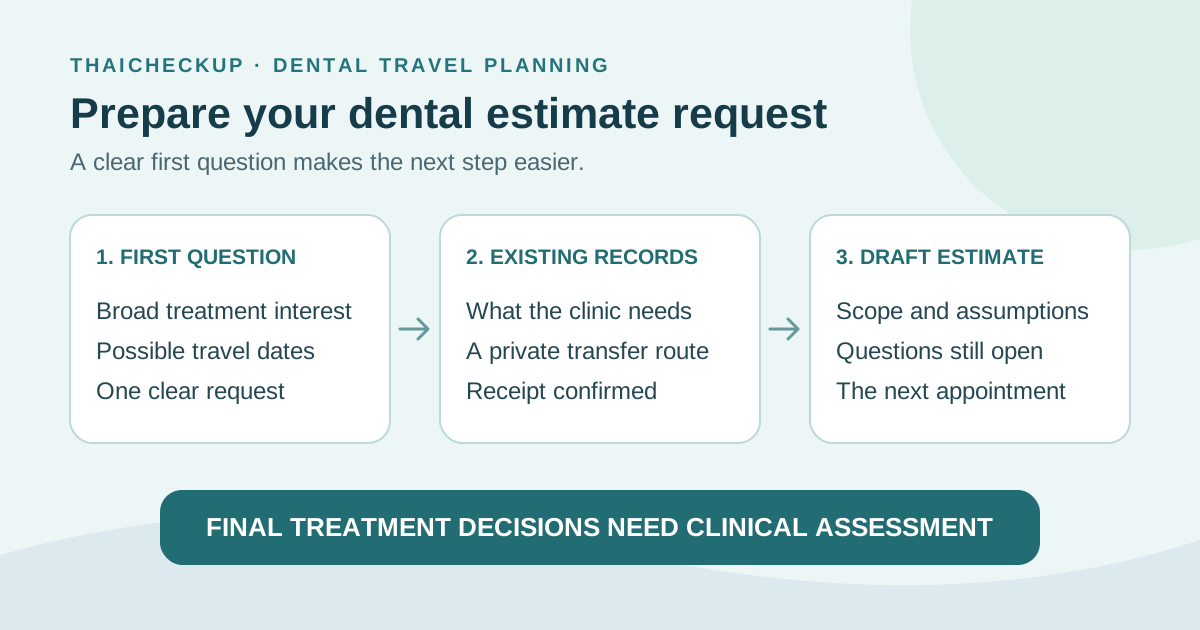
You can ask a Thai dental clinic about an estimate before booking a trip. Make the first message easy to answer: explain the broad dental work you are considering, when you could travel, whether you have an existing treatment plan or images, and what you need to know next. You do not need to diagnose yourself or collect new scans before asking how the clinic handles an inquiry.
For example, Bangkok International Dental Center’s payment information describes online draft estimates using existing X-rays, treatment plans, or photographs when available. It also invites people without those records to explain their concerns. The page makes clear that fees depend on an actual examination and assessment.
Treat that as one provider’s published process. Ask your chosen clinic what it can assess remotely, what information it wants, and which decisions will remain provisional until you attend.
1. Make the first inquiry short and specific
Give the clinic a broad treatment question, such as asking about an assessment for a crown or discussing options for a missing tooth. If a dentist has already suggested a procedure, say that you have a written plan rather than presenting it as a treatment decision the new clinic must follow.
Include your preferred city, travel month or possible dates, and whether your trip length is fixed. Say if you can consider a later return visit. These are planning constraints for the clinic to assess; they do not determine how quickly treatment can safely be completed.
Ask for one next step: the information needed for a preliminary estimate, an initial consultation appointment, or clarification of a public offer. Keep passport copies, payment details, clinical photographs, and medical records out of a general first-contact message. Ask where the clinical team wants any necessary records sent.
2. List existing records before sending attachments
Make a brief inventory of what you already have: a dated dentist’s plan, existing dental images, a recent written report, or photographs requested by the receiving clinic. Note the date and source of each item. If you do not know what kind of image you have, say so rather than guessing.
The American Dental Association’s patient guidance on X-rays explains that a new dentist may request copies of previous images and that the need for imaging depends on the dentist’s assessment. Ask the dentists involved whether your existing records are useful and how to transfer them. Let a dentist decide whether new imaging is needed.
Ask the receiving team which files, formats, dates, or photograph views it needs. Use its designated private submission route, and ask how to confirm the records arrived and can be opened. Do not post records in public comments or send them to several unverified contacts to seek a faster answer.
Provide requested medical history, medicines, allergies, and other clinical details through the clinic’s intake process. If something relevant has changed since an older record was made, tell the clinical team. A record inventory helps organize the exchange; it does not replace a clinical history or examination.
A first-inquiry worksheet
Use this sheet to prepare your question and track what the clinic still needs. Keep the clinical documents separate from the general inquiry, and record unanswered items as “not confirmed.”
| Information | Put in the first inquiry | Confirm with the clinic |
|---|---|---|
| Main question | Broad treatment interest or assessment question | Which service or clinician can assess it |
| Existing advice | Whether you have a dated dentist’s treatment plan | Whether the team wants a copy and how to send it |
| Images and reports | What you already have and when it was made | Which records are useful and the accepted format |
| Travel window | Preferred city and possible dates or month | Availability and what can be planned before assessment |
| Trip limits | Fixed departure date or ability to return later | Which timing assumptions remain provisional |
| Contact preference | Preferred reply channel and time zone | Who handles the inquiry and the expected next update |
| Record submission | Ask for the designated private route | Receipt, readable files, and anything still missing |
| Requested answer | Estimate requirements or consultation options | The next decision, responsible contact, and open questions |
3. Ask what the preliminary estimate is based on
When an estimate arrives, ask what information was reviewed, which requested treatment it covers, and what has not yet been assessed. Ask whether a dentist has reviewed the clinical material or whether the response is an administrative outline based on the service you asked about.
Request a dated document stating the currency, included work, exclusions, and assumptions. Ask which charges or treatment choices can only be confirmed after an examination and whether the first assessment has a separate fee. An online estimate should help you plan a conversation and budget without being mistaken for an agreed final treatment plan.
Once you have an actual proposal, use our dental implant quote worksheet or dental crown comparison checklist for the detailed inclusion questions. Send the same broad question and relevant existing information to each clinic you choose to compare.
4. Confirm the first visit separately from the treatment schedule
BIDC’s visit-planning page describes an appointment process and a dentist’s checkup, diagnosis, and treatment plan during the visit. That distinction matters: an inquiry, a preliminary estimate, and an appointment confirmation are separate steps.
Ask whether the first booking is for consultation only or whether treatment might be offered after assessment. Confirm the branch, appointment time, expected assessment charges, and any instructions the clinic needs you to follow. Let the treating dentist determine suitability, investigations, and preparation.
Ask the clinic to distinguish proposed visit dates from confirmed appointments. If it cannot yet determine the full schedule, record what must be assessed before it can do so. If the plan later changes, our guide to revised dental quotes covers how to clarify the new scope, payments, and appointments.
5. Make the next reply easy to act on
Before ending the exchange, ask who owns the next step and when to expect an update. If the clinic asks for information, answer its outstanding questions together and identify any item you do not have. Keep the reply in the same conversation where practical so the context stays clear.
If the expected update does not arrive, check your spam folder and follow up with the inquiry date, the question still open, and a request to confirm whether anything is missing. You can verify the clinic’s contact details on its official website. Avoid repeatedly resending sensitive attachments just because a message has not been answered.
A first message you can adapt
“I am considering [broad dental work or an assessment] in [city] around [month or possible dates]. My travel window is [fixed/flexible], and I [can/cannot yet commit to] a return trip. I have [an existing treatment plan/images/no records available]. What information would your clinical team need for a preliminary estimate, and which private channel should I use for any requested records? Please explain the next step and what can only be confirmed at the first examination.”
For help organizing that first question, prepare your dental estimate inquiry with ThaiCheckup. Share the broad treatment interest, preferred city, travel month, and the detail you want clarified. Leave clinical images, records, passport details, and payment information out of this initial inquiry.
Our dental care directory is a starting point for exploring services. The chosen clinic must confirm what it can review and the care appropriate to you.
Sources checked on 20 November 2026. BIDC is an example of a published inquiry process, not a ThaiCheckup partnership or a promise that another clinic follows the same process. No response time, final price, treatment eligibility, or appointment is guaranteed by this guide.